

Section 122 Implications for Wood Products
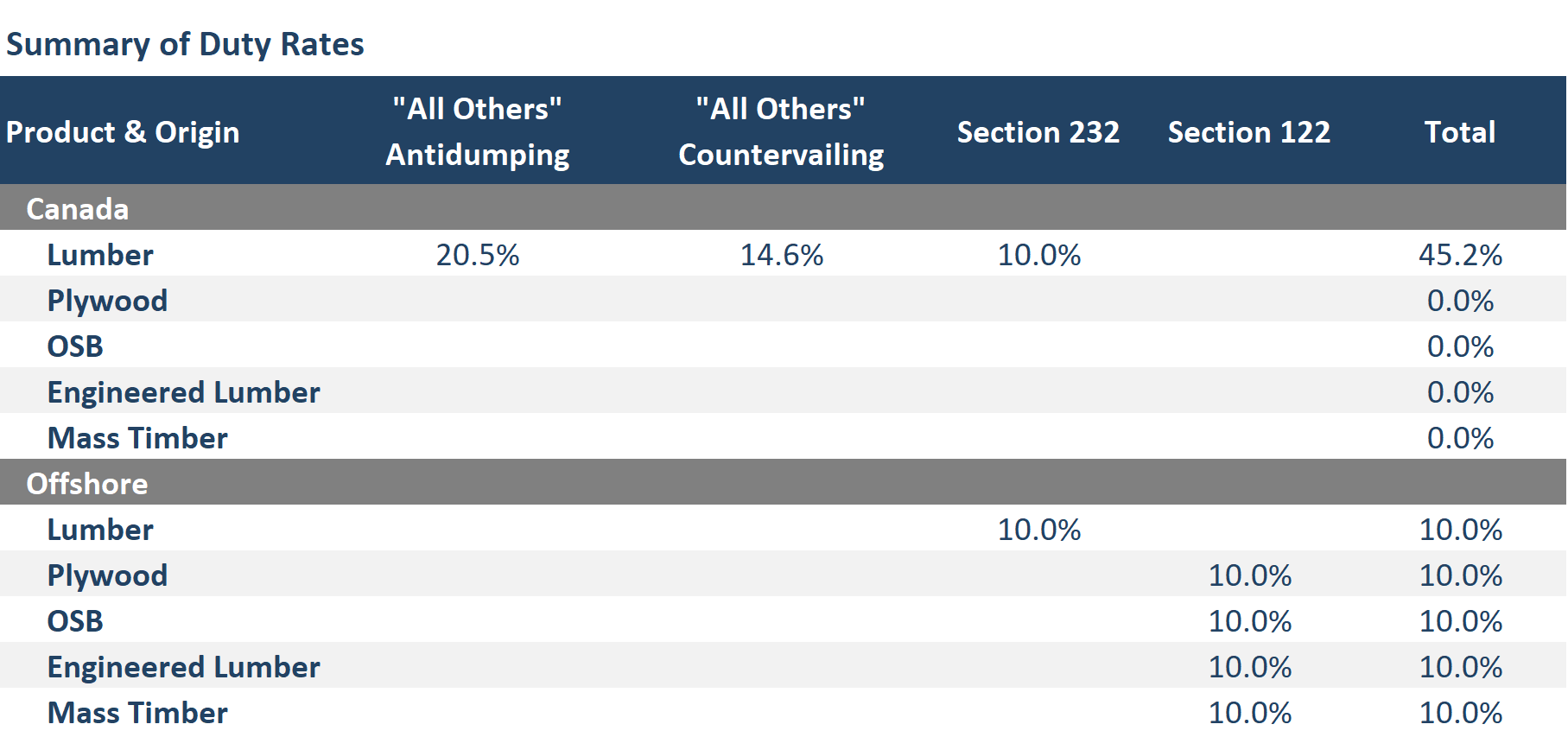
On Friday, February 20, President Donald Trump announced a 10% temporary import duty under Section 122 of the Trade Act of 1974, shortly after the US Supreme Court struck down his tariffs imposed under the International Emergency Economic Powers Act (IEEPA).
The Section 122 surcharge is scheduled to take effect February 24 and remain in place for up to 150 days.
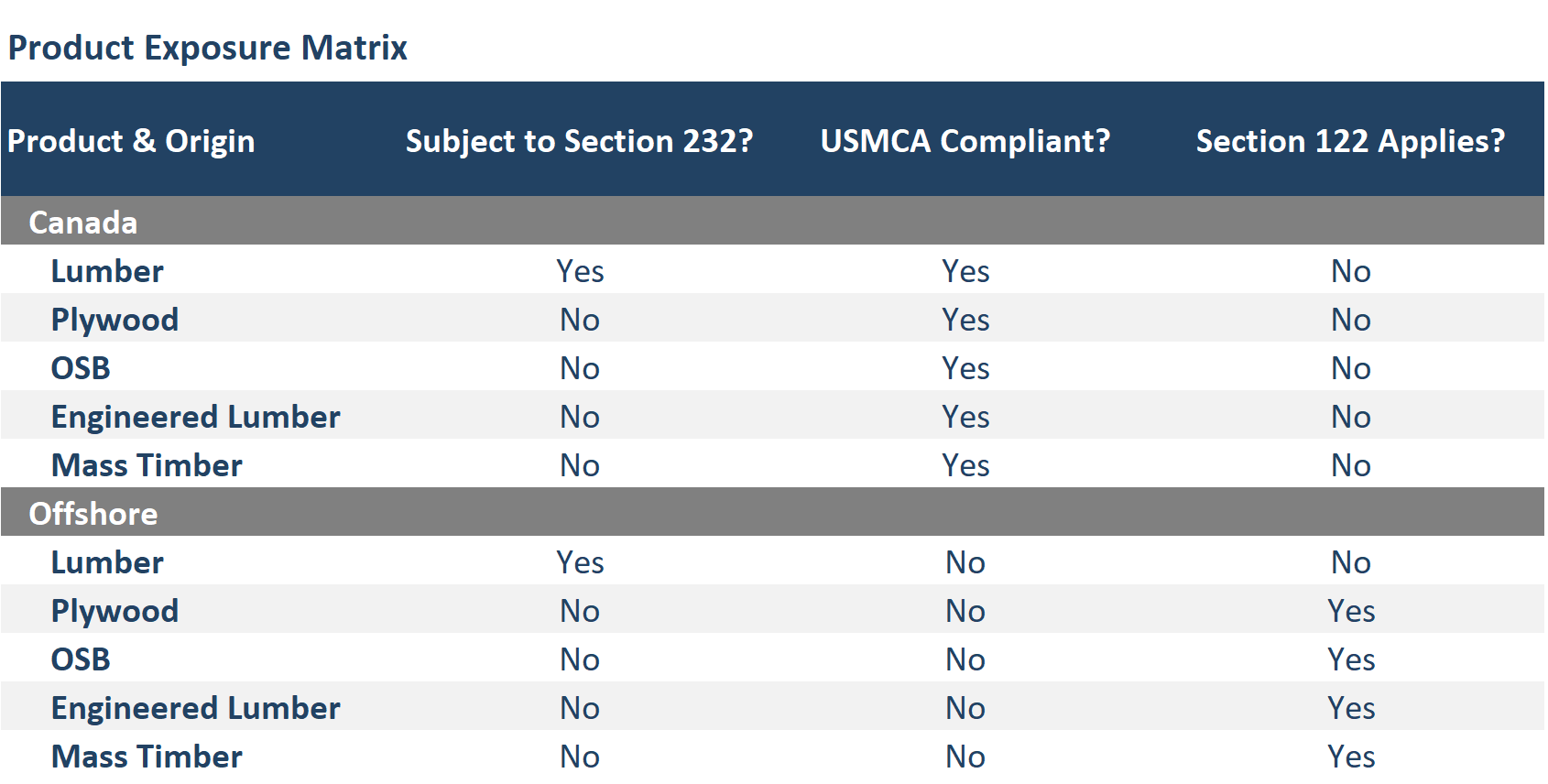
Under the proclamation, Section 122 duties do not apply to goods that are subject to Section 232 of the Trade Expansion Act of 1962 or that are USMCA compliant. Therefore, the implications for wood products are as follows:
- Lumber is subject to Section 232 and therefore is not subject to Section 122.
- Canadian plywood, OSB, engineered lumber, and mass timber products that are USMCA compliant—which covers nearly all Canadian production—are not subject to Section 122.
- Offshore plywood, OSB, engineered lumber, and mass timber products are subject to Section 122 because they are neither USMCA compliant nor covered by Section 232.
The exemptions and current duties are summarized in the tables below.
Note: In a social media post on Saturday, February 21, Trump said the 10% Section 122 rate would be increased to 15%—the maximum allowed by the statute. However, as of mid-day Monday, February 23, the White House had not released a corresponding order. We assume the exemptions will remain if/when the rate is increased.
FEA compiles the Wood Markets News from various 3rd party sources to provide readers with the latest news impacting forest product markets. Opinions or views expressed in these articles do not necessarily represent those of FEA.